End-of-tenancy Cleaning Checklist for SW1V (Pimlico)
If you are moving out of a flat or house in SW1V, the last thing you want is a messy handover. A proper End-of-tenancy Cleaning Checklist for SW1V (Pimlico) helps you leave the property in a condition that meets the usual expectations of landlords, letting agents, and inventory clerks. It also gives you a calmer move-out day. Truth be told, moving is stressful enough without finding grease behind the hob or dust sitting on top of wardrobes at the eleventh hour.
This guide walks you through what end-of-tenancy cleaning actually means, how to approach it room by room, what usually gets missed, and how to judge whether you can tackle it yourself or would be better off bringing in help. It is written for real homes in Pimlico, where compact kitchens, older fittings, and busy schedules can make a thorough clean a bit more fiddly than people expect.
Table of Contents
- Why End-of-tenancy Cleaning Checklist for SW1V (Pimlico) Matters
- How End-of-tenancy Cleaning Checklist for SW1V (Pimlico) Works
- Key Benefits and Practical Advantages
- Who This Is For and When It Makes Sense
- Step-by-Step Guidance
- Expert Tips for Better Results
- Common Mistakes to Avoid
- Tools, Resources and Recommendations
- Law, Compliance, Standards, or Best Practice
- Options, Methods, or Comparison Table
- Case Study or Real-World Example
- Practical Checklist
- Conclusion
- Frequently Asked Questions
Why End-of-tenancy Cleaning Checklist for SW1V (Pimlico) Matters
End-of-tenancy cleaning is not just a quick tidy-up. It is the difference between a property that looks "lived in" and one that looks genuinely ready for the next tenant. In SW1V, where flats can be compact and high-use areas show marks quickly, this matters even more. A smudged cooker hood or dusty skirting board can stand out fast in a well-lit Pimlico flat, especially during an inspection.
The main reason this checklist matters is simple: it helps you meet the standard that is usually expected at the end of a tenancy. That standard is often described in tenancy paperwork as being professionally cleaned or returned in a similar condition to the start of the tenancy, allowing for fair wear and tear. The wording varies, so you should always check your own agreement rather than assuming. Still, a structured checklist gives you a practical route to a clean handover.
There is also a financial angle. If a landlord or agent believes the property has not been cleaned properly, they may raise a dispute over the deposit. That does not mean every small mark becomes a problem - nobody reasonably expects a flat to look brand new - but heavy grime, neglected appliances, or limescale in bathrooms can absolutely trigger concerns. A good checklist helps you avoid that awkward back-and-forth later. And honestly, nobody wants to be discussing oven trays after moving boxes all day.
For tenants in Pimlico, timing matters too. Many people are juggling removals, key handover, final meter readings, and travel across central London. A checklist brings order to that chaos. It turns a big task into a sequence you can actually finish.
How End-of-tenancy Cleaning Checklist for SW1V (Pimlico) Works
A proper end-of-tenancy clean works best when you think in zones rather than trying to clean randomly. Start with the high-level surfaces, move to fixtures and fittings, and finish with floors and detail work. That way, dust and debris fall downwards while you work, not onto areas you have already cleaned. Simple, but easy to forget when the clock is ticking.
The checklist should usually cover every room and every fixed surface. In practice, that means kitchens, bathrooms, bedrooms, living areas, hallways, storage spaces, and sometimes external areas like balconies if they are included in the tenancy. The exact scope should match the property inventory where possible. If the inventory recorded a clean oven, for example, then a visibly greasy oven at the end can become a problem.
A good process often looks like this:
- Remove personal belongings and rubbish first.
- Work from top to bottom, starting with dusting and cobweb removal.
- Clean inside cupboards, drawers, and wardrobes.
- Tackle kitchen appliances and bathroom fittings.
- Wash walls, switches, handles, and other touchpoints if marked.
- Vacuum and mop floors last.
- Do a final inspection in daylight if possible, because afternoon light can reveal streaks you missed earlier.
One thing people often overlook is that end-of-tenancy cleaning is partly about presentation. A bathroom can technically be clean but still look uncared for if mirror edges are streaky or limescale rings are left on taps. So the aim is not just hygiene. It is visual finish as well.
If you are comparing professional help with doing it yourself, it can be useful to understand how different services fit into the job. A broader deep cleaning service may help when a property needs more than a standard surface clean, while move-out cleaning and end-of-tenancy cleaning are usually more focused on handover standards and inspection readiness.
Key Benefits and Practical Advantages
The biggest benefit is peace of mind. Once the checklist is done, you can hand over the property knowing you have covered the essentials rather than hoping you remembered everything. That feeling alone is worth a lot when you are already dealing with moving vans, key receipts, and the usual small chaos of leaving a place.
There are other practical advantages too:
- Better deposit protection: a thorough clean lowers the chance of avoidable cleaning disputes.
- Faster inspections: agents can check the property more easily when it is clearly maintained.
- Less last-minute panic: you are less likely to realise at the door that the inside of the fridge is still dirty.
- More reliable handover: the property feels ready for the next person, not half-finished.
- Clearer budgeting: if you use professionals, you can compare options based on what is actually included.
There is also a quality-of-life benefit that people do not talk about enough. A proper clean can make the move feel finished. It gives you a clean break, literally and emotionally. You lock the door, hand over the keys, and know you left things decently. That matters.
For landlords or tenants preparing a property for immediate reoccupation, a link between the final clean and other related services can be useful. For example, if the home has tired carpets, carpet cleaning or steam carpet cleaning may help, while stubborn marks on sofas or curtains may need upholstery cleaning or curtain cleaning.
Who This Is For and When It Makes Sense
This checklist is for tenants, landlords, agents, and anyone helping with a move-out in SW1V. It is especially useful if you are:
- leaving a rented flat and want to avoid a cleaning dispute
- preparing a property for inventory checkout
- moving out of a furnished or semi-furnished home
- handing back a property after a short tenancy or corporate let
- trying to decide whether to clean yourself or book help
It also makes sense when the property has seen everyday wear: kitchen grease, bathroom limescale, dusty blinds, or marks on high-touch areas. Let's face it, a property can look tidy at first glance and still fail the sniff test up close. You notice the little things once you start opening cupboards and checking corners.
In Pimlico, this is particularly relevant for smaller period flats where dust builds up on ledges, behind radiators, and around sash windows. You may not think of those areas daily, but an inventory clerk will. That is the reality.
If the tenancy has a tight turnaround, you may also be dealing with another service at the same time, such as move-in cleaning for your next property or one-off cleaning if you just need a single deep reset rather than ongoing cleaning support.
Step-by-Step Guidance
Here is a practical way to work through an end-of-tenancy clean without missing the obvious stuff. If you like ticking boxes, this is the bit to print or save on your phone.
1) Start with decluttering and waste removal
Remove all personal items first. Check cupboards, under beds, on top of wardrobes, inside the airing cupboard, and behind bathroom storage. Take out all rubbish and any forgotten food. Old packaging in a kitchen drawer or a half-empty cleaning bottle in the bathroom can slow everything down later.
2) Dust high and hard-to-reach areas
Begin with light fixtures, tops of cupboards, picture rails, curtain poles, and ceiling corners. In a typical SW1V flat, dust often gathers on higher mouldings and around ventilation points. A microfiber cloth and a steady hand usually do the job. If there is more debris than dust, a after builders cleaning approach may be needed, especially if there has been recent decorating.
3) Clean the kitchen thoroughly
The kitchen is often the hardest area to get right. Focus on the hob, oven, extractor fan, splashbacks, sink, taps, worktops, fridge, freezer, cupboards, and handles. Remove crumbs from drawers and shelf edges. Wipe the inside of the microwave. Check under appliances, because grime loves to hide there. It really does.
If the oven is heavy with burnt-on residue, a targeted oven cleaning service can be a sensible choice. For homes with mixed hard flooring in kitchen and hallway areas, hard floor cleaning may help restore a more even finish.
4) Tackle the bathroom methodically
Bathrooms are all about limescale, soap residue, and damp marks. Clean the toilet inside and out, including the base and hinges. Descale taps, shower heads, glass screens, and tiles where needed. Scrub the bath, sink, and plugholes. Dry down mirrors and chrome so they do not streak. If you can smell mildew, do not ignore it - find the source and deal with it properly.
5) Clean bedrooms and living spaces
In bedrooms, check wardrobes, bedside tables, skirting boards, behind doors, and under the bed. In living areas, look at shelves, lamps, sockets, windowsills, radiators, and any built-in storage. If the property has visible marks on upholstery, consider whether sofa cleaning or stain removal is needed before inspection day.
6) Don't forget glass, mirrors, and windows
Fingerprints and smears are easy to miss until the light hits them just right. Wipe internal glass, mirrors, and accessible windows. If you are in a property with lots of natural light, which is lovely on move-in day but unforgiving on move-out day, streaks show up fast. A proper window cleaning finish can lift the whole property.
7) Finish with floors and final details
Vacuum carpets, rugs, and soft furnishings if included. Mop hard floors after everything else is done. Then do a final walk-through looking for fingerprints, soap marks, dust lines, and forgotten corners. Open every door, check every room from the threshold, and look at the place as if you were seeing it for the first time. Slightly annoying? Yes. Worth it? Absolutely.
Expert Tips for Better Results
If you want a cleaner result without wasting time, these are the habits that make the biggest difference.
- Use the inventory as your guide. The inventory is often the closest thing to a scorecard. Match the level of cleanliness described there where reasonably possible.
- Work from the back of the property forward. That way, you are not walking dirt through freshly cleaned rooms.
- Keep two cloths in each room. One for dust, one for damp wiping. It saves a lot of back-and-forth.
- Allow drying time. A kitchen or bathroom can look clean but still fail on damp streaks if you rush the finish.
- Check corners and edges. Most people clean the obvious middle parts. The residue sits at the edges.
- Use daylight when possible. Artificial lighting hides more than you think.
A small practical insight: the best cleaning order is usually the least glamorous one. Cupboards before floors. Tops before bottoms. Dry dust before wet wipe. Boring? Yes. Effective? Very.
For stubborn dirt, be cautious with strong products on delicate finishes. Older Pimlico properties can have surfaces that react badly to harsh chemicals. Test first in a hidden spot if you are unsure. That is not overcautious; that is sensible.
If the property includes shared areas, entrances, or communal corridors, you may also want to think about communal area cleaning if those spaces are part of the handover responsibility. Not every tenancy includes this, but when it does, it matters.
Common Mistakes to Avoid
A lot of end-of-tenancy issues come from a few repeat mistakes. Once you know them, they are fairly easy to avoid.
- Cleaning too late: If you leave everything for the final morning, you will rush the detail work.
- Forgetting hidden areas: Behind bins, under sinks, behind radiators, and inside drawers often get skipped.
- Assuming "tidy" equals "clean": Tidiness helps, but it does not remove grease or limescale.
- Using the wrong product: Harsh cleaners can damage surfaces or leave residue that looks worse than the original mark.
- Ignoring odours: Damp towels, fridge spills, pet smells, or bin residue can undermine an otherwise decent clean.
- Missing the final inspection: This is the stage where small things show up - a streak on a mirror, dust on a skirting board, a sticky drawer handle.
One of the sneakiest mistakes is forgetting the inside of appliances. The fridge may be empty, but if there is a smell or a dried drip under the shelf, someone will notice. Usually right after you have put the keys in your pocket. Classic.
Another common issue is overestimating how much can be done with just a quick vacuum and a bottle of spray. For a proper handover, the property needs a deeper and more systematic approach. That is why many people combine general cleaning with room-specific work such as house cleaning or domestic cleaning when the home needs broader support.
Tools, Resources and Recommendations
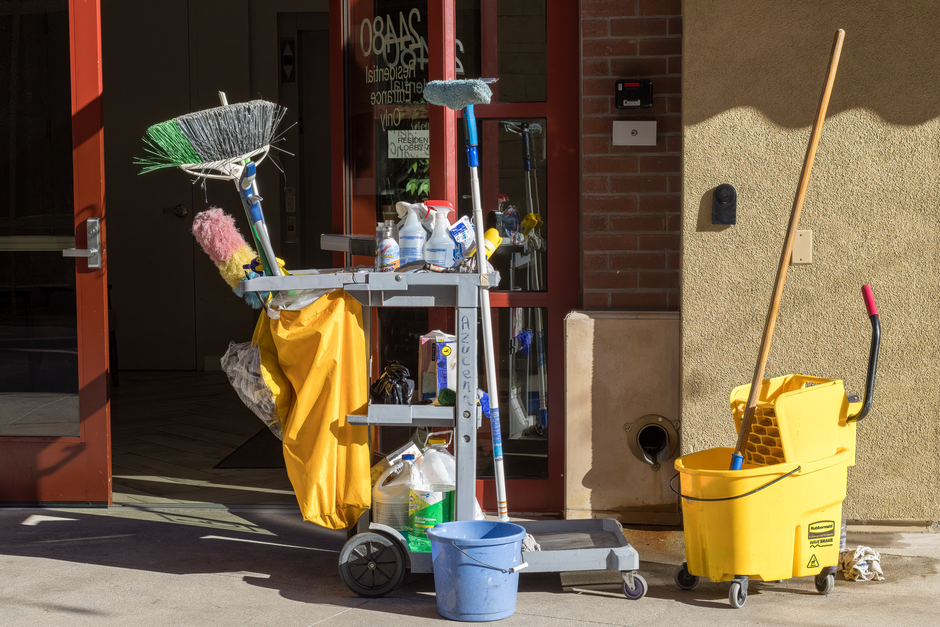
You do not need a van full of equipment, but the right tools make the job far easier. A sensible end-of-tenancy kit usually includes:
- microfiber cloths
- non-scratch sponges
- vacuum cleaner with attachments
- mop and bucket
- glass cleaner or a streak-free alternative
- descaling product suitable for bathrooms
- degreaser for kitchen surfaces
- rubber gloves
- bin bags
- small brush or crevice tool for corners and tracks
If you are dealing with carpet stains, pet marks, or dull patches, it may be worth using specialised support instead of trying to scrub everything yourself. Related services such as pet stain odour removal, mattress cleaning, or rug cleaning can be useful when standard cleaning is not enough.
It also helps to set yourself up properly before you begin. Open windows for ventilation where possible, clear out clutter, and gather all products in one place. Nothing slows you down like wandering from room to room looking for the sponge you definitely had five minutes ago.
If you want to compare your options before booking anything, pricing and quotes is a practical place to start. For a general overview of the company and service approach, the about us page can also help build confidence before you decide.
Law, Compliance, Standards, or Best Practice
End-of-tenancy cleaning sits in a practical rather than a heavily regulated space, but there are still important standards to keep in mind. The main one is the tenancy agreement itself, because that usually sets the expectation for the property's condition at handover. You should also keep in mind the principle of fair wear and tear, which means normal ageing is not the same as neglect. A small scuff on a wall is not the same as an uncleaned kitchen extractor, for example.
Inventory reports are another important reference point. They often document the condition at move-in, and they are commonly used at move-out to compare what has changed. That is why photos, receipts, and clear communication can be helpful if there is any disagreement. Keep your records. A few phone pictures taken in good light can be surprisingly useful.
For properties with cleaning equipment, chemicals, or access issues, best practice also includes safe handling. Use products according to label guidance, ventilate rooms where needed, and avoid mixing cleaning chemicals. If a job feels unsafe or physically awkward - high windows, heavy lifting, difficult staining - it is usually better to stop and seek support than to push through blindly.
Professional services should also be transparent about what they include. If you are comparing providers, it is sensible to ask whether appliances, windows, inside cupboards, and carpets are part of the scope. That saves a lot of crossed wires later. You can also review practical policies like health and safety policy, insurance and safety, and terms and conditions to understand how a provider operates.
Options, Methods, or Comparison Table
There is no single right way to handle the end-of-tenancy clean. The best choice depends on the property, your time, and how much detail is needed. Here is a straightforward comparison.
| Option | Best for | Pros | Trade-offs |
|---|---|---|---|
| DIY cleaning | Smaller flats, lighter wear, flexible schedule | Lower direct cost, full control, can start early | Time-consuming, easy to miss details, physically tiring |
| Partial professional help | Problem areas like ovens, carpets, or upholstery | Targets the hardest jobs, good for stubborn stains | Still leaves the rest for you to finish |
| Full end-of-tenancy clean | Busy moves, larger properties, strict handover expectations | Most thorough, less stress, easier to coordinate | Higher upfront spend than DIY |
If the property has heavy dust, post-renovation residue, or long-unused rooms, a more intensive option may be sensible. In some cases, regular cleaning is not enough and you need a more complete reset through one-off cleaning or even a specialist service mix.
For commercial-style or mixed-use spaces, the cleaning approach is different again. A flat in Pimlico is not the same as an office or shared premises, so it is worth choosing a method that matches the actual property type rather than just the name of the service.
Case Study or Real-World Example
Here is a simple real-world scenario from the kind of move many people in SW1V face. A tenant in a one-bedroom Pimlico flat had a short turnaround between moving out and handing back the keys. The place looked tidy at first glance, but the inspection list revealed a few pressure points: grease around the hob, dust on top of wardrobes, cloudy bathroom glass, and marks around door handles.
Rather than try to clean everything in one frantic evening, the tenant split the job into sections over two days. First came rubbish removal and cupboard checks. Then the kitchen was tackled properly, including the oven and inside the fridge. The bathroom followed, with a focus on taps, glass, and the shower screen. The final pass was all about floors, skirting boards, and the windowsills that collect dust so easily in central London flats.
That staged approach made the difference. The flat did not need to be perfect in a magazine sense. It just needed to be consistently clean, with no obvious misses. The handover felt smoother, and the tenant avoided the stress of cleaning under pressure on moving day. A fairly ordinary story, but a useful one. Most successful move-outs are like that: organised, not dramatic.
In some cases, the tenant had also arranged carpet cleaning because the living room rug had visible traffic marks. That extra step helped the overall finish look more complete. Small things matter at checkout.
Practical Checklist
Use this checklist as a final pass before keys are handed back. If you can tick everything here, you are in strong shape.
- All belongings removed from every room
- All rubbish and food waste disposed of
- Inside cupboards, drawers, and wardrobes wiped clean
- Kitchen appliances cleaned inside and out
- Oven, hob, and extractor cleaned properly
- Fridge and freezer defrosted and cleaned if included
- Sink, taps, splashbacks, and worktops cleaned
- Bathroom toilet, bath, sink, and shower descaled and wiped
- Mirrors, glass, and chrome surfaces streak-free
- Dust removed from shelves, skirting boards, radiators, and corners
- Doors, handles, switches, and touchpoints wiped
- Floors vacuumed and mopped
- Carpets, rugs, sofas, or mattresses treated if needed
- Windowsills and accessible internal windows cleaned
- Final inspection done in good light
- Photos taken as a record of condition
Expert summary: The best end-of-tenancy clean is the one that is planned, room by room, with the most visible and most commonly missed areas handled first. If you leave the detail work until the end, the job gets harder very quickly.
If you are still deciding whether to book a service, think about the time you have, the property condition, and the standard in your tenancy agreement. If the answer is "not enough time, and the flat is more worn than I hoped," a professional clean usually starts to make a lot of sense.
Get a free quote today and see how much you can save.
Conclusion
A solid End-of-tenancy Cleaning Checklist for SW1V (Pimlico) gives you structure at a moment when everything else may feel a bit all over the place. It helps you cover the rooms that matter, avoid the usual omissions, and hand back the property with confidence. Whether you clean it yourself, bring in specialist help for the toughest parts, or use a full service, the goal is the same: a fair, tidy, well-finished handover.
In a busy part of London like Pimlico, with tight schedules and compact homes, that kind of clarity is worth having. Take it one room at a time, keep your standards sensible, and do the final check properly. You will feel the difference when the keys are gone and the job is finished. Clean ending, clean slate.
Frequently Asked Questions
What should be included in an end-of-tenancy clean in SW1V?
It should usually include all rooms, inside cupboards, kitchen appliances, bathroom fittings, floors, windowsills, doors, skirting boards, and any fixtures listed in the inventory. The exact scope depends on the tenancy agreement and the property's condition at move-in.
Do I need professional end-of-tenancy cleaning in Pimlico?
Not always. If the property is in good condition and you have time, a thorough DIY clean may be enough. If the home has heavy wear, stubborn stains, or a tight handover window, professional help can be a sensible choice.
Will cleaning alone guarantee I get my deposit back?
No single clean can guarantee that, because deposits can be affected by damage, missing items, unpaid rent, and other issues. But a proper clean reduces the risk of avoidable disputes and makes the handover much smoother.
How long does an end-of-tenancy clean usually take?
That depends on the property size, its condition, and how many people are cleaning. A small flat may take several hours, while larger or dirtier homes can take much longer. The more detail required, the more time you should allow.
What are the hardest areas to clean before moving out?
The kitchen and bathroom usually take the most effort. Ovens, extractor fans, limescale, shower screens, and cupboard interiors are common trouble spots. Carpets and upholstery can also be challenging if there are stains or heavy use.
Should I clean carpets as part of the end-of-tenancy checklist?
Yes, if carpets are included in the property and show use, vacuuming is essential and stain treatment may be needed. If the carpet is heavily marked or smells stale, a specialist carpet clean can be worth considering.
Is a one-off clean the same as end-of-tenancy cleaning?
Not exactly. A one-off clean is a general intensive clean, while end-of-tenancy cleaning is focused on move-out expectations and inspection standards. They overlap, but tenancy handovers usually need a more detailed finish.
What if my landlord asks for something unreasonable?
Check the tenancy agreement and the inventory first. It is reasonable to be asked to leave the property clean, but not to cover fair wear and tear. If something feels excessive, keep calm and communicate clearly with records and photos.
Can I do end-of-tenancy cleaning myself and still meet the standard?
Yes, many tenants do. The key is to be systematic, work methodically, and avoid leaving the detail work to the last minute. A room-by-room checklist makes DIY cleaning much more reliable.
What happens if I miss a few small marks?
Small marks do not always cause a problem, especially if they are consistent with fair wear and tear. But visible dirt, grease, or limescale in obvious places can attract attention. The best approach is to do one final careful check before you leave.
How do I decide between DIY and booking a cleaning service?
Look at the condition of the property, the time left before checkout, and how much effort the kitchen and bathroom need. If the job feels bigger than a normal tidy-up, a professional service may save time and stress.
Are there any safety points I should think about while cleaning?
Yes. Use products as directed, ventilate rooms where possible, and avoid mixing chemicals. If you need to reach high windows, move heavy items, or deal with difficult staining, be cautious and do not push your luck. A safe clean is a better clean.